Recyclability:
PPWR: Which packaging solutions are fit for the future?
The new EU Packaging and Packaging Waste Regulation is putting companies under greater pressure—and that is a good thing. It is forcing producers, brands and retailers to start at the end: What can genuinely be recycled? What fits into existing recycling streams? And which solutions can stand up to regulatory scrutiny?
A commentary by Alexander Rauer, Head of Business Development Functional Barrier Paper at Koehler Paper.
The new Packaging and Packaging Waste Regulation, or PPWR, is prompting the packaging industry to rethink its approach. Cost, marketing and production considerations are no longer enough. Circularity is becoming a decisive factor.
This is exactly where things become challenging for many companies. Flexible packaging has become increasingly complex over the years: different materials, multiple layers and high technical performance. But when recyclability and regulatory certainty come into play, that complexity becomes a disadvantage.
Design for recycling
The PPWR requires all packaging placed on the EU market to be recyclable by 2030. It introduces different recyclability categories, with a minimum recyclability score of 70% for packaging to qualify as “Design for Recycling”, or DfR.
Any company placing packaging on the market needs to start preparing now and plan its transition to recyclable packaging solutions. In my view, the direction is clear: reduce material complexity. Flexible packaging papers can play a decisive role in achieving this.
Anyone placing packaging on the market needs to start preparing for the PPWR now.
Anyone placing packaging on the market should start planning the switch to recyclable packaging solutions today.
Alexander Rauer,Head of Business Development Functional Barrier Paper
Paper as an alternative
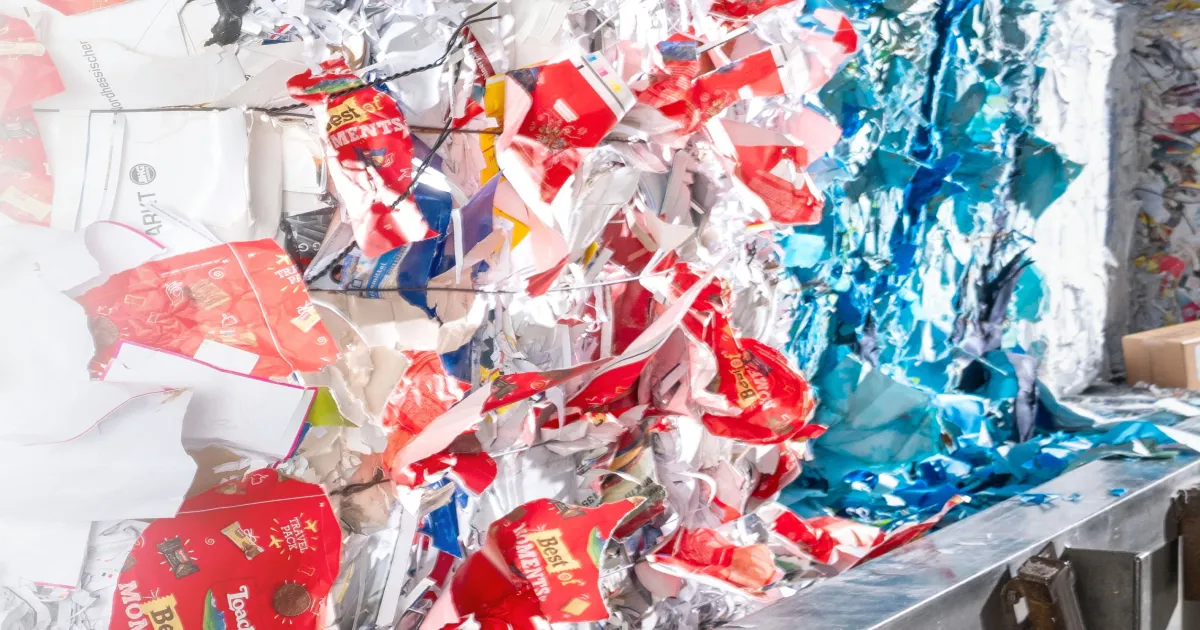
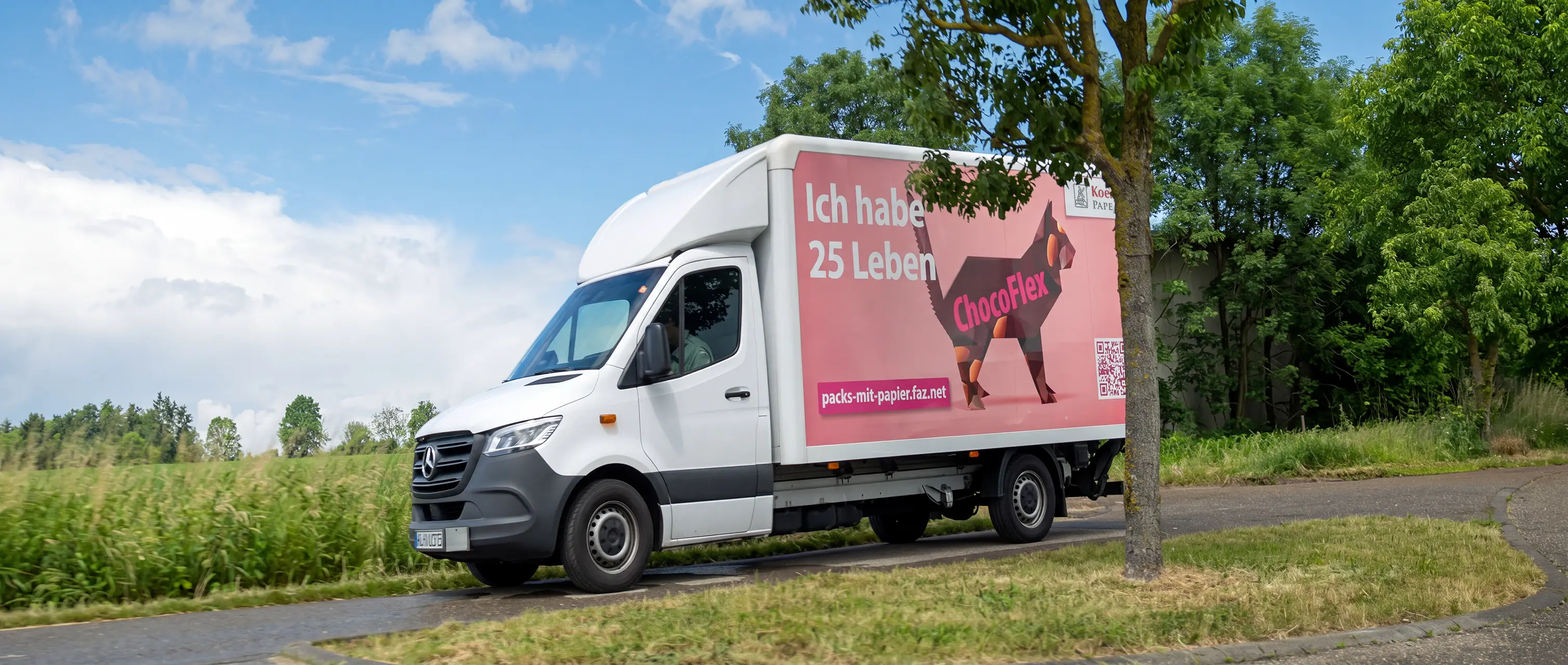
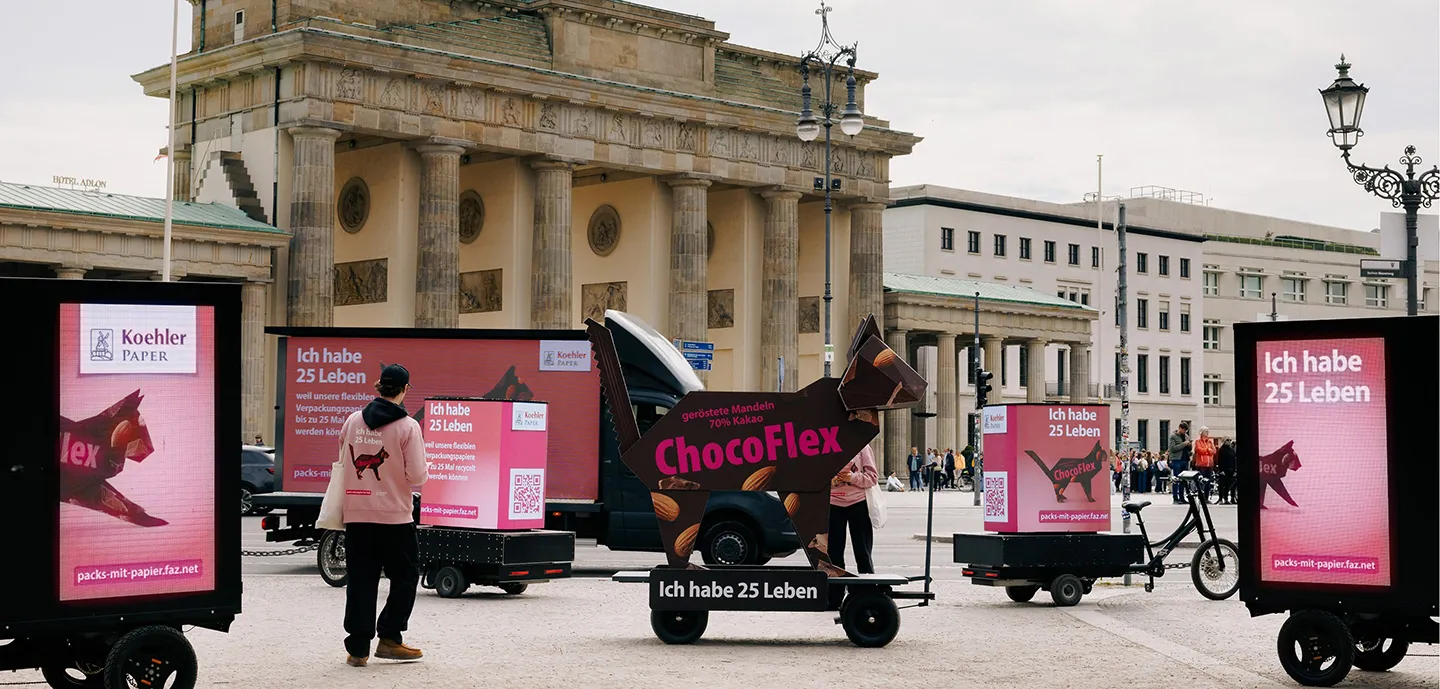
Europe already has well-established collection and recycling systems for paper. In 2024, the recycling rate was more than 84%, and paper fibres can be recycled up to 25 times. For companies looking to make their packaging portfolios fit for the future under the PPWR, these are compelling arguments. Choosing materials that are already collected and recycled at scale in real-world systems reduces uncertainty.
At the same time, flexible packaging still has to protect the product. It may need to provide barriers against oxygen, grease, water vapour or mineral oil. It must be sealable and run reliably on existing packaging lines. With our flexible packaging papers, barrier properties can be combined to suit the individual application. Many of our customers have also demonstrated that switching to paper requires only minimal adjustments.
Regulatory certainty
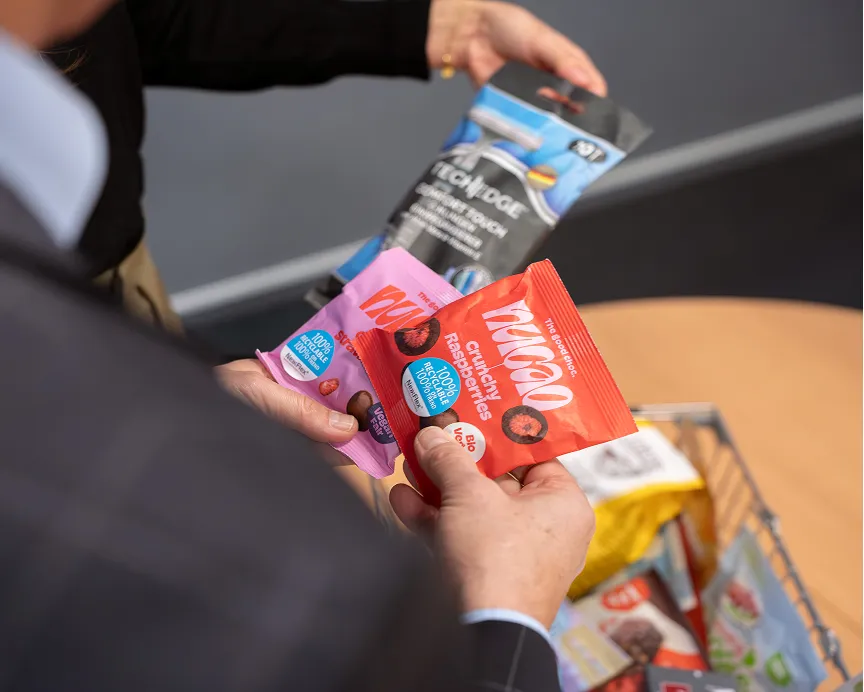
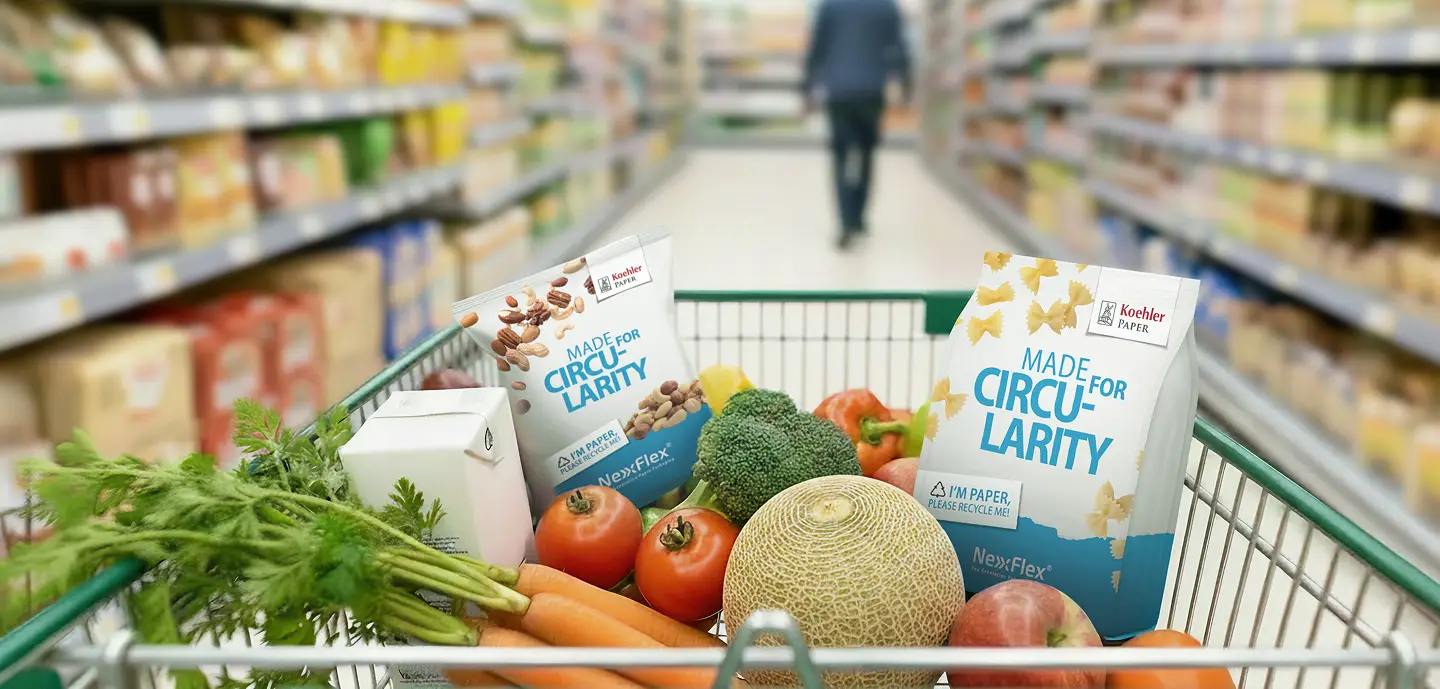
The real question is no longer whether paper-based flexible packaging can provide an alternative to plastic. It already does, as a glance at supermarket shelves shows. The more important question is this: How quickly can companies simplify their packaging structures so that they become circular and meet regulatory requirements with confidence?
Case study: Paper recycling and the PPWR
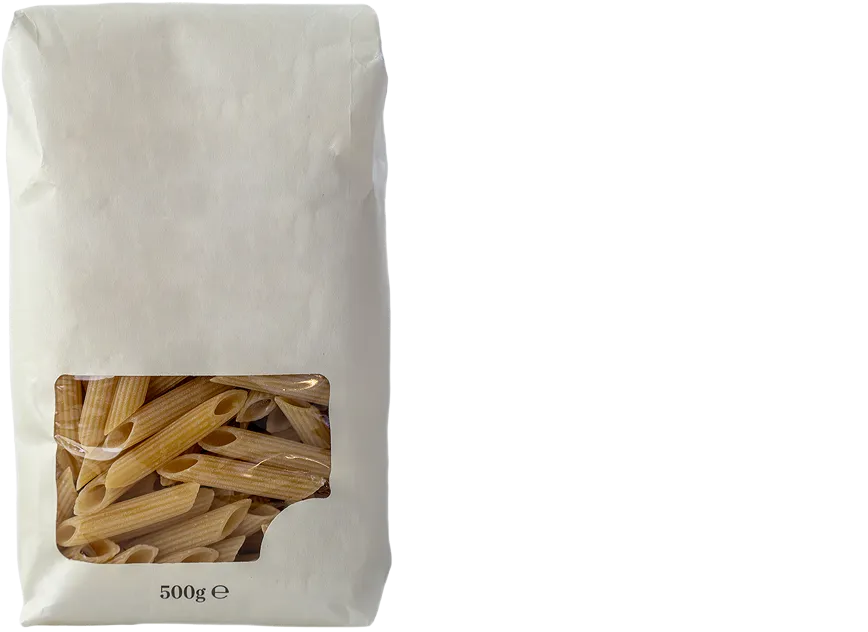
A direct comparison of two pasta packs shows how barrier papers can offer converters, packers and brand owners a future-ready way to meet the requirements of the PPWR.
Packaging 1: Pasta bag
Machine-glazed kraft paper
Basis weight: 60 g/m²
Extrusion-coated with polypropylene
Thickness: 30 microns, equivalent to 27.3 g/m²
Total material weight: 87.3 g/m²
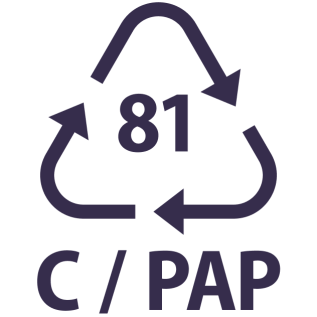
Recycling code C/PAP 81: Composite packaging in which paper is the main material. In this application, the paper is combined with extrusion-coated polypropylene.
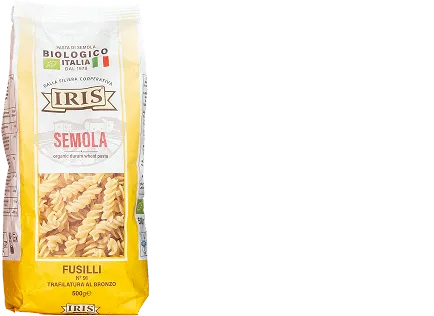
Packaging 2: IRIS pasta bag
Koehler NexPlus® Seal Pure
Basis weight: 80 g/m²
A water-based dispersion coating provides the heat-sealing function
Coat weight: 4 g/m² The dispersion coating is applied on a paper-coating machine
How consumers should dispose of the packaging depends on the country or municipality. Disposal rules vary across Europe and worldwide, and different EPR fees—Extended Producer Responsibility fees—may also apply.
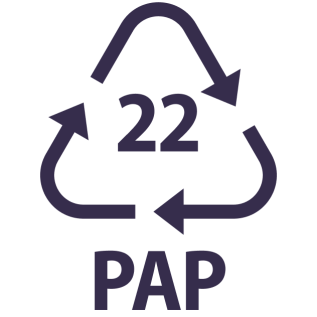
Recycling-Code PAP 22 (Papier):The material is paper and can be recycled in the paper stream together with items such as books and newspapers.
Test method:
CEPI protocol for assessing recyclability, Part I: Conventional recycling mill process
CEPI, the European paper industry association, and 4evergreen, a cross-industry alliance of more than 100 members representing the entire lifecycle of fibre-based packaging, developed this method for assessing recyclability in paper mills using standard processes.
The resulting score depends on a range of parameters, including screening yield, sheet adhesion, dissolved and colloidal substances—DCS—and optical impurities. As DCS are not relevant to the materials examined here, the Total Screening Yield, or TSY, determined under the CEPI protocol can be used to classify the materials according to the PPWR recyclability categories. Both the Total Screening Reject, or TSR, and the screening yield of each packaging solution are recorded.
TSR = CR + FR × a
Where:
TSR is the Total Screening Reject (%)
CR is the Coarse Reject (%)
FR is the Fine Reject (%)
a is the correction factor
Equation 1
TSY = 100% - TSR
Where:
TSY is the Total Screening Yield
TSR is the Total Screening Reject
Results
Packaging 1: Composite structure TSY: 63.7% → Under the CEPI standard, this packaging is highly unlikely to meet the PPWR requirements. It could therefore no longer be permitted to be placed on the EU market from 2030.
Packaging 2: Koehler NexPlus® Seal Pure TSY: 92.8% → The packaging is therefore considered recyclable in a mill using a conventional recycling process. With this recycling yield, it meets the PPWR requirements.
Coarse reject comparison
The Coarse Reject rate, or CR rate, is the percentage by weight of packaging and dry components removed during coarse screening.
Packaging 1: CR rate of 36%
Packaging 2: CR rate of 6.8%
Example: Potential plastic savings
Assumption: A manufacturer uses 300 tonnes of pasta packaging per year.
By switching from the composite structure to Koehler NexPlus® Seal Pure 80, the manufacturer can save around 85 tonnes of plastic per year.
This significantly reduces waste from fossil-based materials. The earlier companies adapt their packaging to the PPWR requirements, the greater the potential environmental benefit.
Conclusion
The comparison of two pasta packs shows how barrier papers can offer converters, packers and brand owners a future-ready way to meet the requirements of the PPWR.
Paper recycling is a mature process, supported by infrastructure that is already available at scale.