Make packaging more sustainable, reduce EPR costs
Paper isn't just a more sustainable alternative to plastic for many types of packaging. It also offers clear advantages in terms of overall costs, as is evident when comparing packaging for oatmeal.
Many manufacturers of branded goods face the challenge of meeting the growing requirements of Extended Producer Responsibility (EPR). One solution: barrier papers. These not only make packaging more sustainable, but also more cost-effective.
Total Cost of Ownership – More Than Just Material Costs
The “Total Cost of Ownership” (TCO) is a financial estimate designed to help determine the direct and indirect costs of a product or service. When switching from plastic to paper packaging, this means looking beyond just the material cost and processing expenses. Indirect costs, such as EPR fees, are also crucial for recognizing the true benefits of paper packaging.
Case Study: Oatmeal Packaging
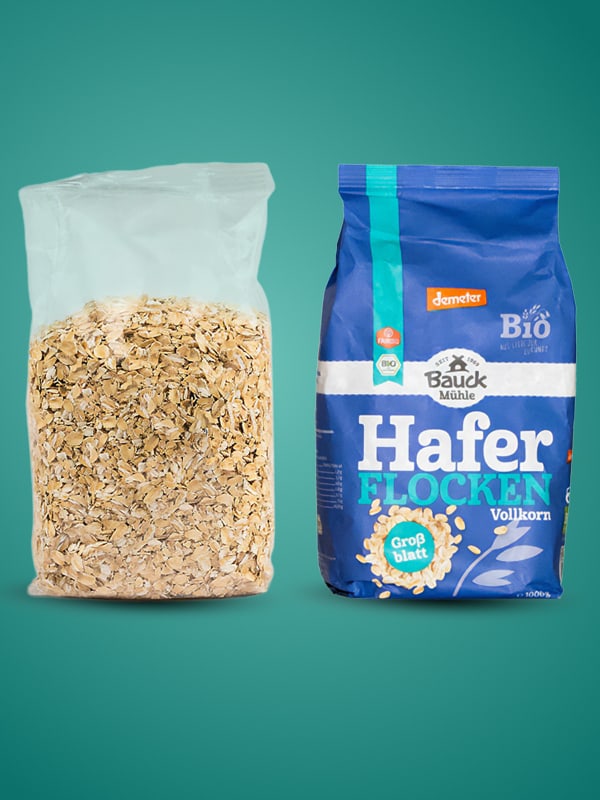
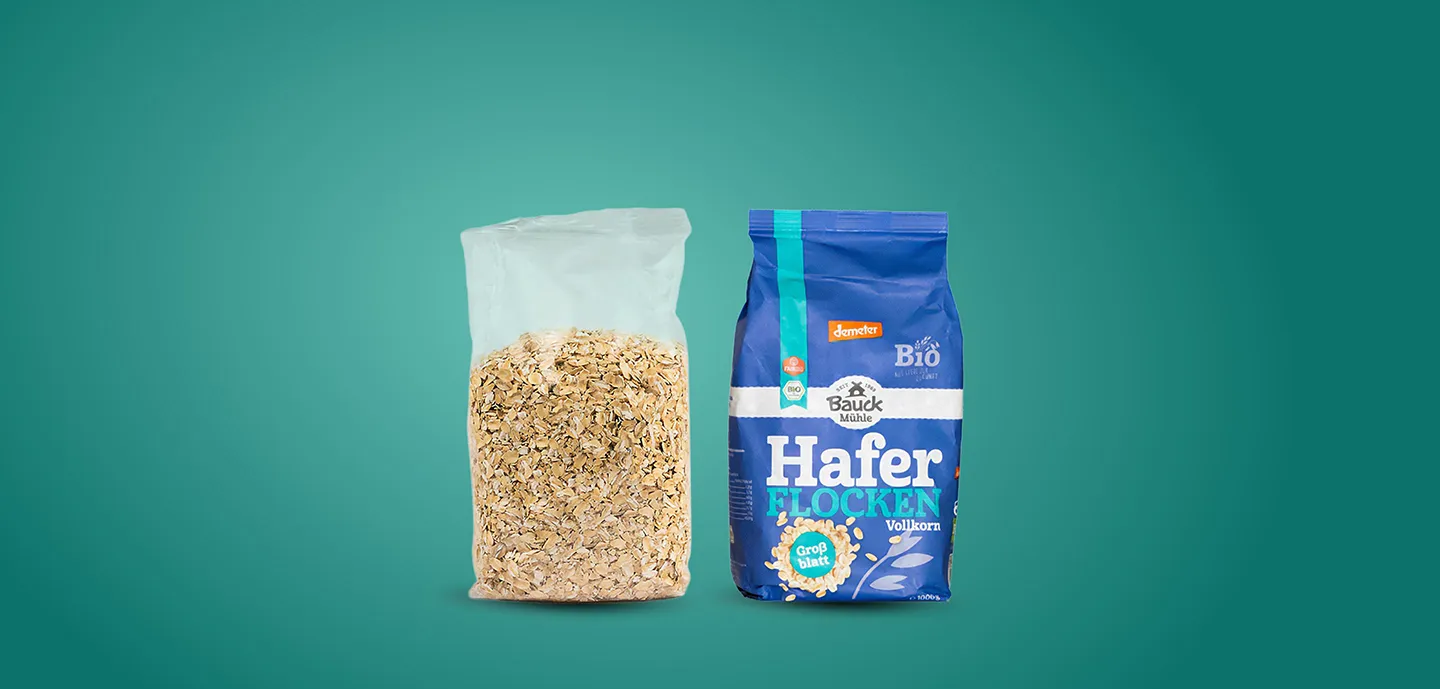
We are comparing two packages of oatmeal, each measuring 300 mm x 265 mm and containing 500 g.
What does EPR stand for?
EPR stands for “Extended Producer Responsibility” and is an environmental policy approach that holds brands financially accountable for the entire lifecycle of their packaging. Accordingly, manufacturers pay EPR fees based on the volume of packaging or products they place on the market.
The rules vary across Europe and around the world. In addition, different EPR fees may apply depending on the waste streams through which consumers dispose of the packaging and the composition of the packaging. In some cases, recycling certificates, reuse potential, or the proportion of recycled material may also play a role.
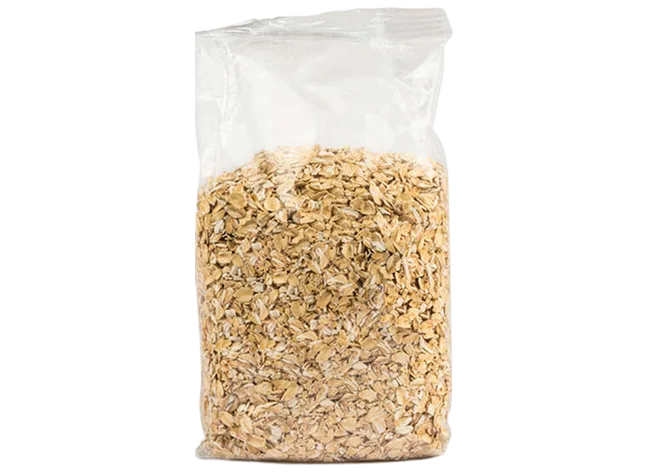
OPP film (Oriented Polypropylene), 73 g/m² (80 microns)*
- *standard basis weight for this type of oatmeal bag
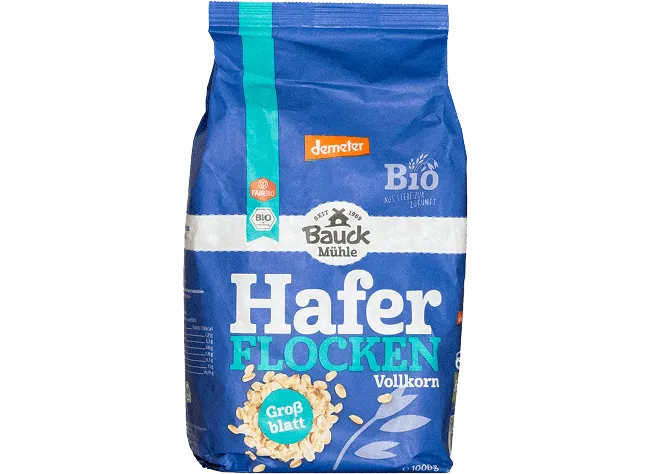
Koehler NexPlus® Seal Pure MOB, 72 g/m²
CEPI-certified, recyclable, heat-sealable, with a mineral oil barrier
- The barrier coating is a water-based emulsion coating with a coating weight of 6 g/m². Emulsion coating is a well-established process in paper manufacturing.
Average EPR costs across 19 European countries
Calculation
To calculate the EPR fees—which depend on material composition, recyclability, and country—we used the Recyda software.
To simplify the simulation in the software, we assumed unprinted packaging in both cases.
Countries Compared: Austria, Belgium, Bulgaria, the Czech Republic, Finland, France, the United Kingdom, Germany, Greece, Hungary, Italy, the Netherlands, Norway, Poland, Portugal, Romania, Slovakia, Spain, Sweden.
EPR costs in EUR per ton of packaging
EPR costs in EUR per 1,000 packages
With Koehler NexPlus, EPR costs in 19 European countries have fallen by an average of 56 percent—that’s 375 euros less per ton or 2.20 euros less per 1,000 units of packaging.
In some countries, the savings are even more significant:
Spain: 83% reduction in EPR costs (€6 per 1,000 packages)
Belgium: 92% reduction in EPR costs (€10 per 1,000 packages)