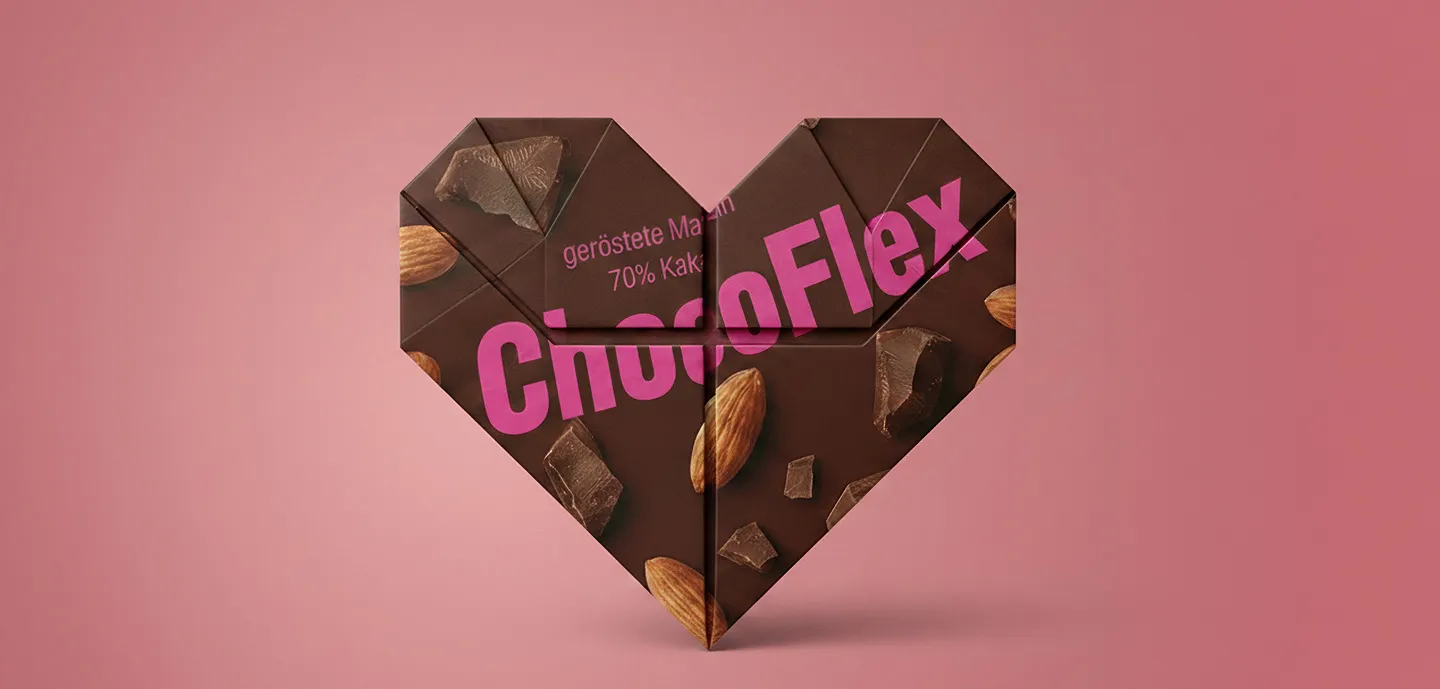
Innovations are often the result of a simple question. For example: Can chocolate be packed in paper? At Koehler, this is followed by a process that goes far beyond mere product development. In fact, the development process behind Koehler NexPlus® Advanced shows why Koehler sees innovation as a system
The number of times you’ve worried about the packaging when buying chocolate at the supermarket is probably pretty close to zero. And yet that packaging needs to do a lot: Keep oxygen and mineral oil out. Not let grease through. Be easy to process. And wouldn’t it be nice for it not just to be recyclable, but to actually get recycled?
“We wanted to develop paper that could be used for packaging and would be a cost-effective rival to plastic,” explains Aljoscha Föll, Head of Innovation Management at Koehler. “It had to combine multiple functionalities in a single layer.”
Coating Know-How
In other words, the idea that would lead to our Koehler NexPlus® Advanced range of offerings was not some random thought. Instead, it was the result of a strategic decision: “We went over our know-how and our technical capabilities and then decided to expand our flexible packaging paper operations for what was a growth market,” Föll explains.
For Koehler as a manufacturer of specialty paper, innovation has always played an enormous role. This has enabled the company to build up unparalleled know-how over generations, and that includes expertise related to paper with functional coatings. That latter knowledge proved to be invaluable when developing the company’s flexible packaging paper.
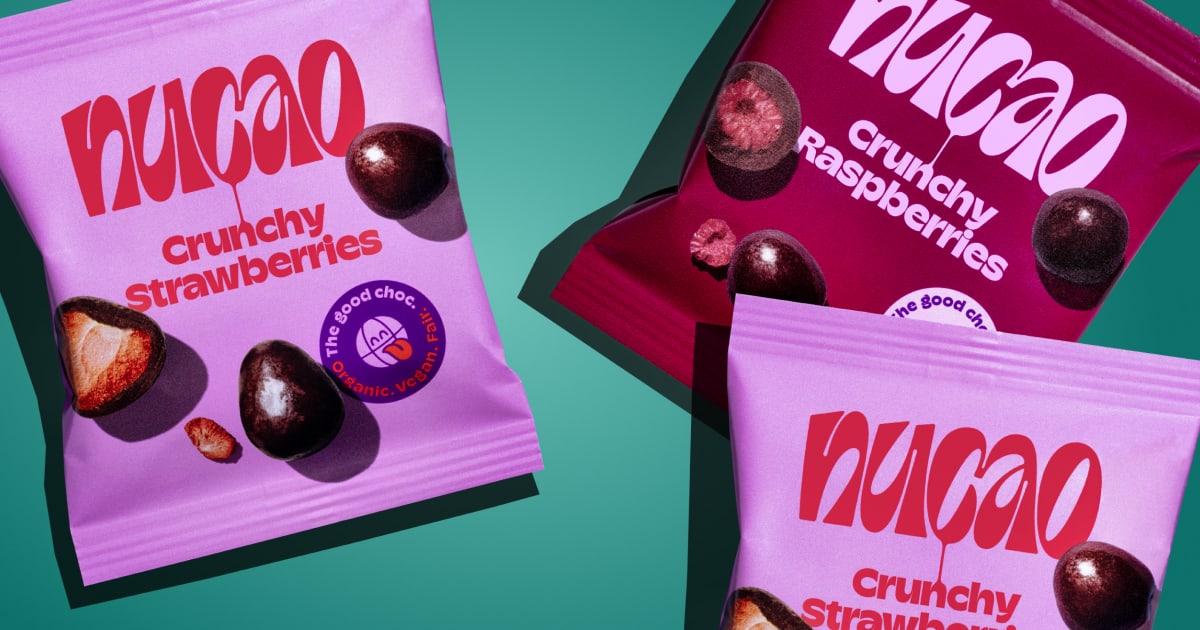
The push for developing Koehler NexPlus® Advanced specifically as packaging for chocolate came with an inquiry. “A chocolate manufacturer came to us and asked whether there was a way to pack their bars in paper,” recounts Alexander Rauer, the Head of Business Development at our FlexTech Division. “We started developing it together, knowing that it was possible that we had a solution up our sleeves already. Koehler started by asking what the technical requirements were: What did the paper need to do? What processes did it need to be able to handle, from printing, to packaging, to storage? What barriers did it need, say, against grease?
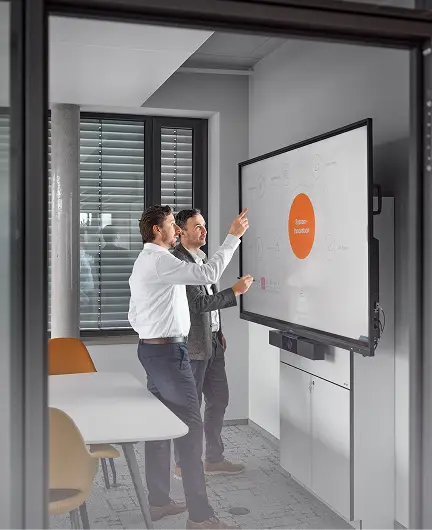
Conception
Innovation as a process: At Koehler, new products don’t just happen at random, but are instead the result of strategic decisions.
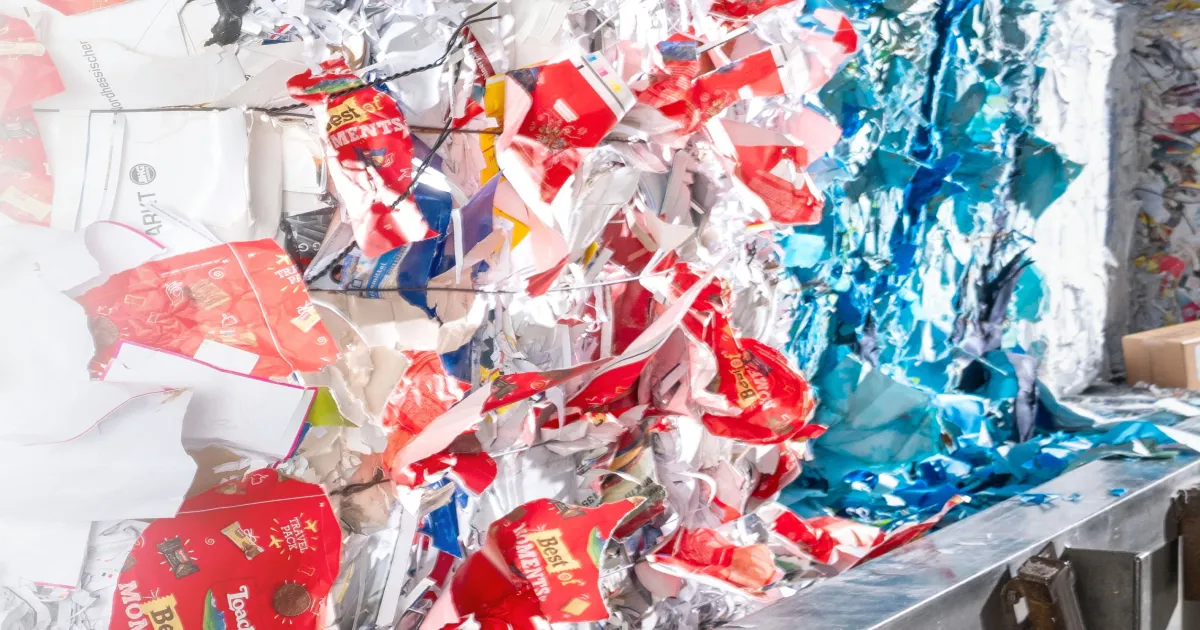
Recycling Lab
Recyclability is a crucial factor from the moment new barrier paper products start being developed.
From the Lab Up
After all the requirements were clear, the team selected the right raw materials. This step was particularly important, as the paper coating, and the corresponding barrier properties, heavily depends on it. “Our development strategy rests mainly on three pillars,” explains Corporate Director of Technology Dr. Christian Kölmel. “One, we qualify and procure commercial raw materials. Two, we pursue collaborative developments with select suppliers. Three, we proactively drive the development of new innovative raw materials with renowned universities and institutes, for example.”
We went over our know-how and then decided to expand our flexible packaging paper operations for what was a growth market.
Aljoscha Föll, Head of Innovation Management
Lab staff conducted tests to check whether the raw materials had the necessary characteristics, such as barrier properties and the ability to be safely and reliably sealed in packaging later on. The raw materials were then formulated in such a way that they would meet stringent requirements for efficient, safe, and reliable paper production.
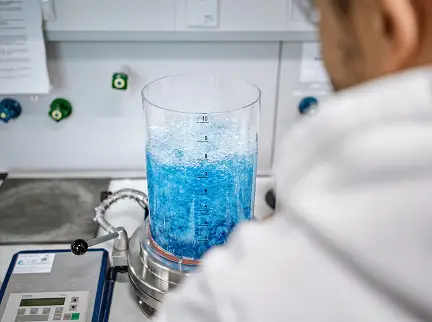
Lab Coating
Raw materials need to be formulated in such a way as to meet stringent requirements for efficient and reliable paper production.
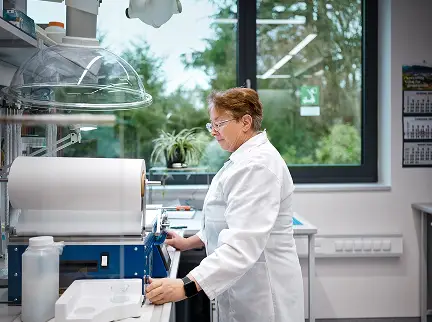
Analysis
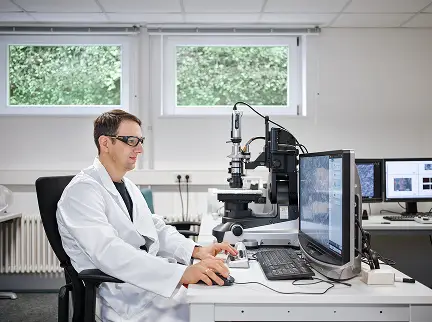
Before new paper makes it to the pilot system, it is extensively tested at the lab.
The Moment of Truth
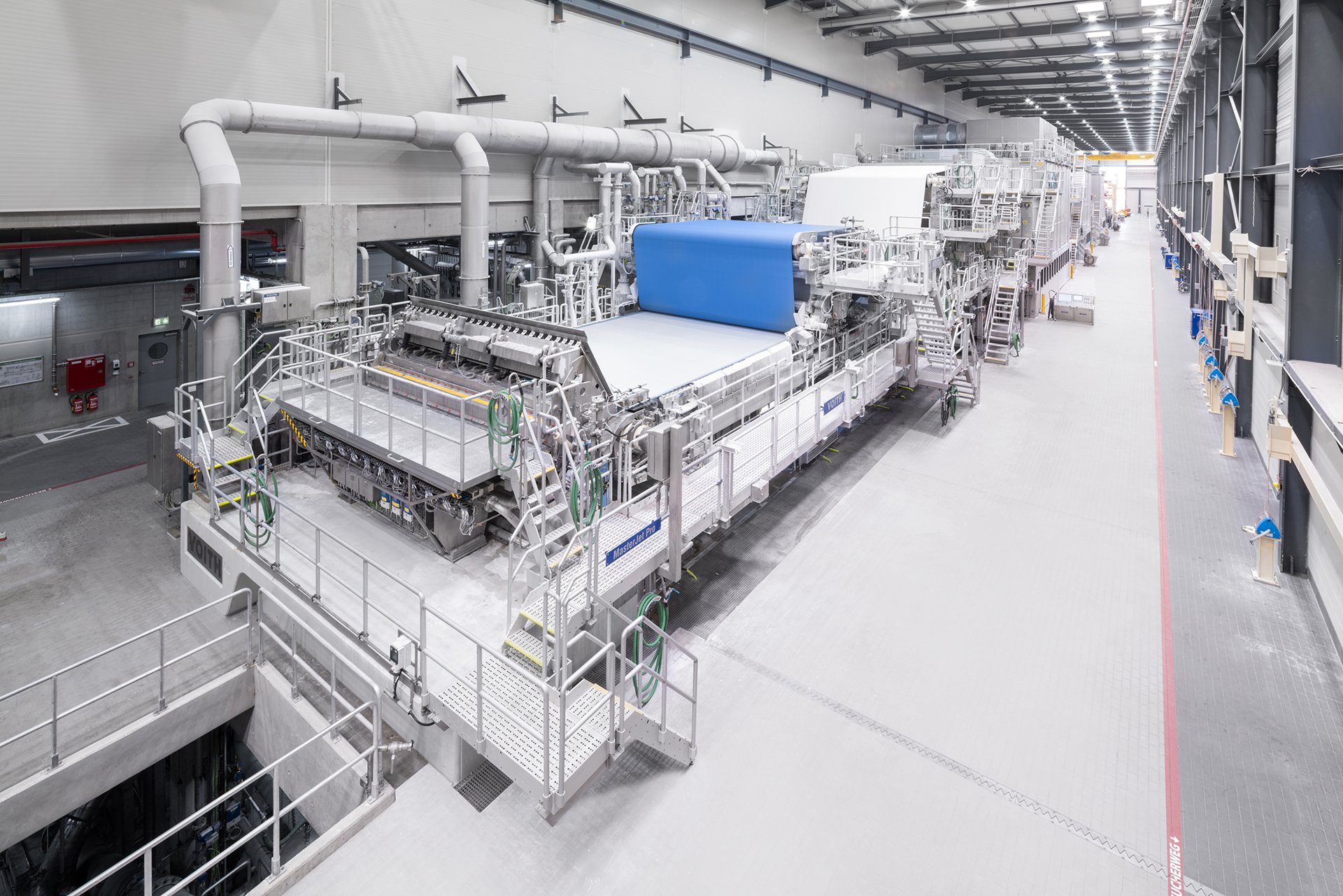
Then came the moment of truth: real-life testing. Koehler uses a unique pilot system for this purpose. “It lets us analyze, in very realistic conditions, how the things we’re developing will do during actual production,” Kölmel explains. “It also enables us to make paper in quantities, sizes, and qualities that can be used by converters, print shops, and packing companies.”
The same goes for recyclability: Koehler can use the paper output by the pilot machine to check whether it meets all requirements in this regard. “This allows us to comprehensively test value chain requirements early on,” Föll explains, “cutting down significantly on time-consuming back-and-forth changes during actual production.”
The reason we stand out is that we’re able to apply the system mindset consistently during development.
Dr. Christian Kölmel, Corporate Director of Technology
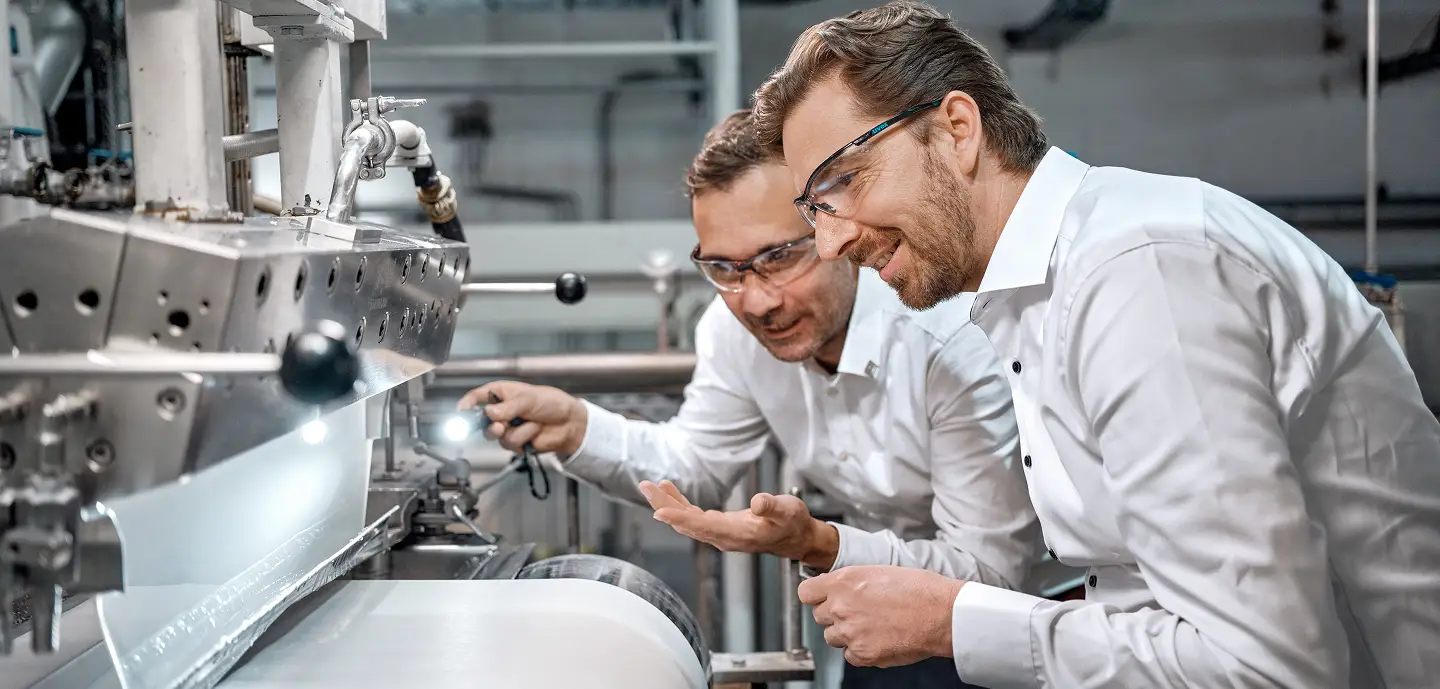
Pilot Testing
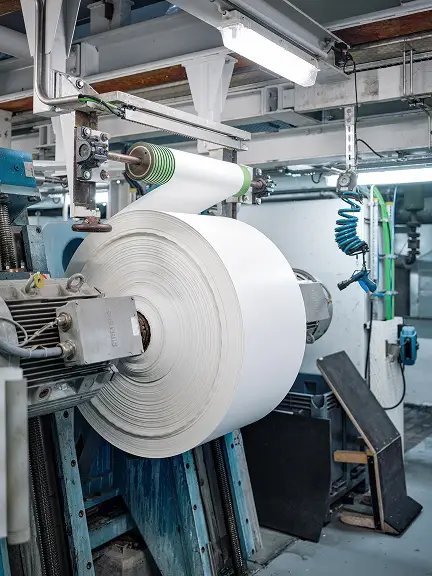
Thanks to our unique pilot system, new paper can be tested in very realistic conditions – from how it will behave in production to its recyclability.
“Pilot testing allows us to really understand and fulfill every single requirement,” Kölmel adds. “It enables us to apply systems thinking consistently during development and leaves its mark on our process.” Getting potential users involved early on is also a typical part of Koehler’s innovation process. “To validate innovations, we need someone who will go the distance with us,” Rauer explains, “someone who’s willing to test out materials in their early stages. And while that happens, we work on scaling up, that is, on verifying process capability and transferring everything to our actual large-scale systems.”
Meanwhile, brand owners run storage tests and check the materials in their processes to see whether the packaging can protect the corresponding product along the entire supply chain. “If everything works, we get together at the end and have a marketable product,” Rauer succinctly puts it. This was the case with Koehler NexPlus® Advanced and many other Koehler barrier paper offerings that have since emerged from this innovation system.
To validate innovations, we need someone who will go the distance with us.
Alexander Rauer, Head of Business Development FlexTech
Innovation in a Nutshell
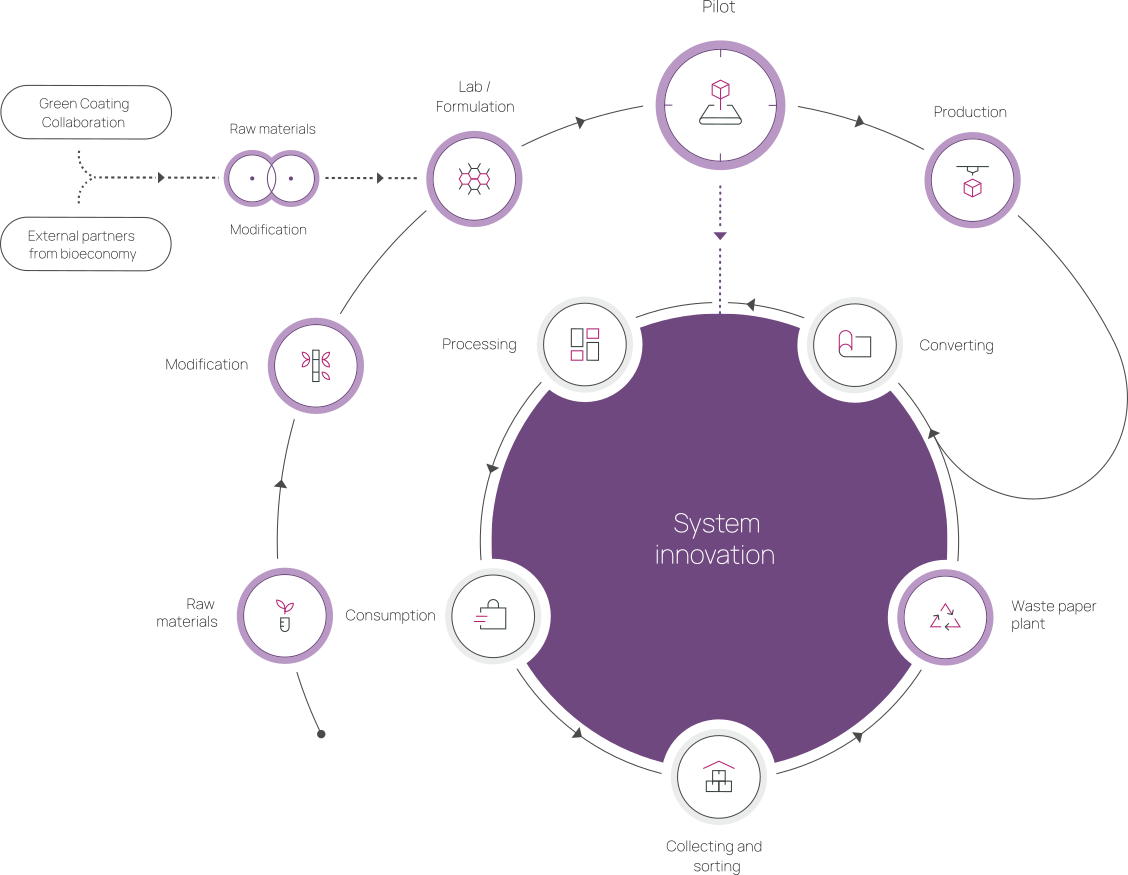
System innovation at Koehler
System mindset and strategic decisions: At Koehler, innovations are never just random.
Importantly, we get potential users involved early on, and our unique pilot system plays a role in that.